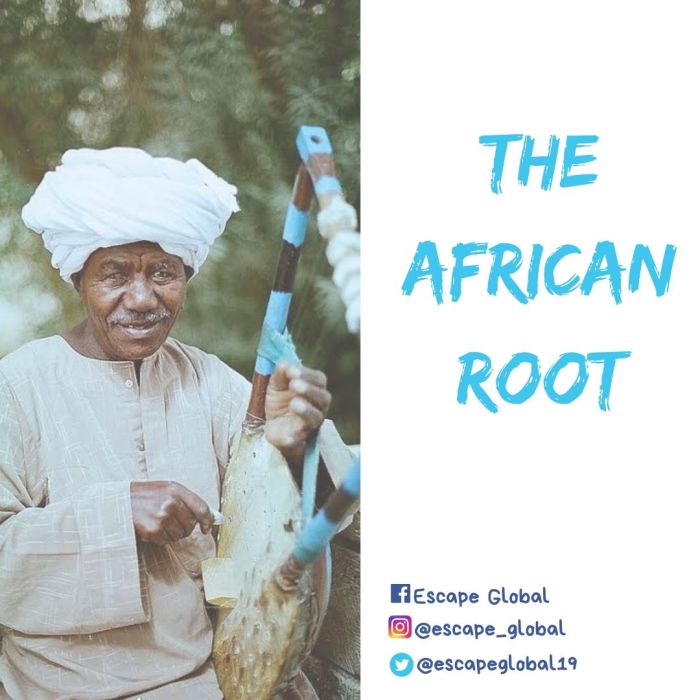
I am sure in the last one week we have had questions of whether this kind of therapy has any root in Africa as a whole. Whether or not there is a traceable history of Music Therapy in Africa is what is about to be unveiled here.
Goodnews! Music Therapy in Africa is traceable, its as old as tradition itself, it may not have been documented or even given a definite name as we have it now but it has long been existent.
Just a background knowledge of Africa for my non-African followers, Africa is the second largest continent in the world with about 1.2 billion people of the world’s population as of 2016. Africa has a very rich and beautiful cultural heritage, among the many continents in Africa are Nigeria, Egypt, Republic of Benin, Rwanda, Republic of Congo, Kenya and so on.
I’m sure by now you already have a little background knowledge of the continent Africa. There has been a question if Music Therapy has ever existed in Africa. Learning about this, I was thrilled at such rich`history Africa has and in this post I will be sharing a few.
In Africa, music is seen in every stage of life, from birth to death. Every transition or call it change in status calls for the use of music, from birth to adulthood to marriage to death.
The inception of Music Therapy in Africa has been since Ancient times, although there were few written records, most of the information have been by oral transmission which is passed down from one generation to another.
In Ancient Egypt, ancient man used singing and dancing as a part of his rituals to throw out the evil spirits, which were waiting to attack him with several diseases. Abidos Temple was the biggest center of medicine in Ancient Egypt and the priests treated diseases with chant. It was discovered that there was a saint called Abu Terbo who treated epilepsy using pipes chant. Egyptian priests and physicians alluded music as medicine for the soul, chant therapies were also included as part of the medical practice. Below this post is a link to a video of Ancient Egypt healing Music, listen and let me know your thoughts about it.
In some other parts of Africa also, Music Therapy was also instrumental in TRADITIONAL HEALING. For example in Nigeria, it was embedded in culture and was mostly performed by native doctors. For Non-Africans, NATIVE DOCTORS are not the same as HOSPITAL DOCTORS, they are doctors who use traditional prescriptions and carry out rituals also. These Native Doctors had specialty in healing with the use of ritual music.
Traditional healing had a lot to do with SPECIFICS, that is there had to be a SPECIFIC song to be sung, a SPECIFIC time of the day or night and a SPECIFIC traditional instrument had to be used for this purpose, it was not just done without restraints.
Professor Mereni, the foremost forerunner of Music Therapy in Nigeria conducted a research in the town Irigwe in Plateau state of Nigeria. He discovered that the traditional medicine man called Nevo prescribed the “Sa rije” ritual, this is a ritual characterized by music and dance and is used as treatment for women suffering from a syndrome known as “Ci rima”.
A patient with “Ci rima” syndrome had the following symptoms; prolonged abnormal pains, vomiting, persistent diarrhea, hallucination, fever and prolonged loss of appetite. While this happens, the “Nevo” prescribed the music ritual ceremony known as “Sa rije”. It was then used in the treatment of the woman suffering from Ci rima syndrome. It is said that certain patterns of music were used as the Nevo observed the patient and gave traditional treatment.
This sums up the fact that Music Therapy has been long existent and also it wasn’t just administered anyhow, they had to follow traditions and cultures.
Despite the viability of Music Therapy since Ancient times, it is one that is still not recognized in many parts of the continent Africa today.
Let me know what you think about this post also in the comment section below. I love reading from you!
Thank you for reading through. Lots of Love!
SOURCES: https://voices.no/community/index.html?q=country-of-the-month%252F2012-music-therapy-nigeria
http://citeseerx.ist.psu.edu/viewdoc/download?doi=10.1.1.508.4197&rep=rep1&type=pdf https://voices.no/community/index.html?q=country-of-the-month%252F2005-music-therapy-egypt