ways to improve motor skills in a cerebral palsy patient

Last week was World Cerebral Palsy day and I thought to do a post that will be helpful to caregivers of Cerebral Palsy patients, children especially.

Cerebral palsy is a motor disorder that is caused by damage to the developing brain. It primarily affects an individual’s movements, balance, and posture. I want to show you practical ways to help a child who has cerebral palsy;

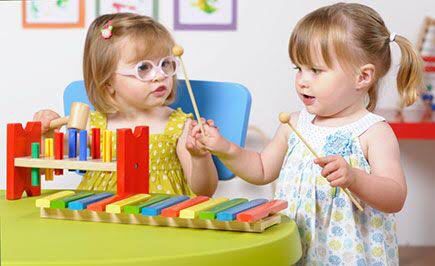
👉 Teach the child to play a musical instrument, this is what it’ll do, it will enhance flexibility and dexterity, which will in turn help refine gross and fine motor skills. A small drum with sticks for example or a small tambourine or a maracas. If you can not teach the child to play a musical instrument, you can employ a tutor if possible who is patient and capable of teaching the child.

👉 Encourage and model walking, dancing and doing exercises while listening to music, it will help strengthen the child’s muscles. It’s technically called Rhythmic auditory stimulation in music therapy, it is the synchronisation of sound and movement to facilitate improvements in biologically rhythmical functions. This rhythmic nature of music also helps to organize the child’s gait, it will teach movements timing to the beat of the music. For example modelling synchronisation of steps to lively music to improve walking speed, you can begin on a slow tempo and increase speed gradually if you are playing a live music and not a recorded one.

👉 The last but the most important is to engage in repetitions, when the results of the first try is pleasing, do not give in to the temptation of relaxing but keep on and on because the human brain is incredibly adaptable, but needs repetitive activities or exercise to become familiar with new functions.

I really looked forward to putting up a video that demonstrates what I have shared here but somehow I can not, please look out for it on my Instagram pages next week; @mercykaynimi or @escape_global. Don’t stop being grateful, I’m rooting for you always!

Kindly let me know in the comment box if this post was helpful.

Need counsel? Need help or have questions? Feel free to drop them here or if for confidentiality’s sake you don’t want to, kindly write to me; mercykayt@gmail.com.

Thank You.

HOW TO HELP A CHILD WHO HAS SPEECH DISORDER USING MUSIC THERAPY

Children who have speech disorder may not learn or master language milestones as other children.

Few years ago I had a patient who had speech disorder, on first meeting he was quite curious to know how the guitar is being played, he also wanted to know how to accompany his voice with it so I gave him the guitar and taught him the placement of the G Major chord, he was able to try it out though his hands were not firm on it, I also taught him the placement of his hands to make the E Minor. He was able to interchange both chords but not conveniently. He sang and played though it felt like noise to everyone around but he enjoyed it and did not feel like returning home with his parents. In the atmosphere of music, he could vocalize.
This experience made me realize the need to teach few simple and helpful ways of working on a speech disorder.

👉 First is to allow your young one listen to music, it helps boosts cognitive functioning, put it on at different times of the day.
A particular study done in 2010 revealed that Children who listened to music closed the developmental gap faster than those who had no music therapy. Those with speech delays moved faster toward correcting speech or improving communication skills at all ages, from toddlers with speech delays to older children. The balanced rhythm of the music helps the child match the words to the beat, providing more measure than normal speech, and therefore helping the child learn how language works trouble-free.

👉 Possibly get a mouth organ to help in breath production and by mouth organ I mean the harmonica or a recorder.

👉 Engage in vocalization of vow and consonant sounds alike, I did a video exemplifying this on my Instagram page, be sure to check it out @mercykaynimi or @escape_global

👉 Engage in the turn-taking technique singing simple and familiar songs with short lyrics. For example, Twinkle Twinkle Little star. I exemplified that too in the video I made on my Instagram page.
The child will be able to pick the words of the shorter song better and will more readily repeat them to the beat.

👉Playing an instrument, such as an acoustic guitar, it also helps the cognitive development of children just like the story of the patient I shared earlier in this post.

👉 Make sure also that everything you are teaching is age appropriate and more importantly be grateful for every process, don’t compare your journey with another.

You are doing very well and I’m rooting for you!

Do let me know in the comment box if this post was helpful.

Need counsel? Need help or have questions? Feel free to drop them here or if for confidentiality’s sake you don’t want to, kindly write to me; mercykayt@gmail.com.

Thank You.

HOW YOU CAN TEACH A SPECIAL NEED CHILD WITH NO Background in music

I have no background in music and I want to teach a/my child with special need.
I know the previous post may have got you wondering how you can teach your child music with no music inclination. I will be sharing few simple steps on how to teach your young one in such a way that it is beneficial to both you and them.


The first thing I’ll like to mention which I mentioned in my previous post is to OWN YOUR JOURNEY, I apologize for reiterating it but if you must make the most of this journey then you will part ways with impatience, comparison, ingratitude and be companions of gratitude any day any moment.


Focus on knowing your CHILD(REN): When preparing to teach music to your child(ren), focus on knowing them, understanding their personalities, what they love and will tend to. Knowing them means you will have to recall the times when they engaged in music, what their response was like, if they love calm or fast music, if they enjoy rhythm, whether they have ever been fascinated by a musical instrument, if there is any genre of music that makes them aggressive or feel frustrated. All these are to let you know that you must be a keen observer, it will help you know which to tone down on and which to elevate. Ask them questions and don’t feel bad if they don’t like what you envisaged them liking.


Focus on learning a musical instrument, be it Voice, Piano, Guitar and so on. Do not dabble into too many musical instruments, you can download videos online to learn, explore yourself and all other spontaneous ideas that might come in the process and as you learn, try engaging your child with it. The goal is to learn while they learn.


Keep things simple with your child. your child isn’t an adult that you would want to please by being prim and proper, you can say things like “Honey you know mummy or daddy is just learning to figure this out so let’s just go with the flow”. Your child will appreciate the commitment, vulnerability and simplicity you put into it. I remember when I just started playing the guitar and was visiting the hospital, because I didn’t know much I always wanted to cringe, then I realized from my interactions with each kid that they didn’t care, they just wanted the simple thing I could play then.


As you grow in teaching them, avoid being rigid, kids love to play and explore a lot and sometimes you might have a bucket list of how you want to teach music but they are just concentrating on one. I used to ‘overprepare’ and then when I begin sessions, they just always have something else they love to do. Do not rush them, give grace and watch how they explore just the one you’ve taught them. the joy is not in how many lessons you can pump down their brain but in the journey that is moving steadily. Be grateful!


Watch sessions on YouTube where children with special needs are engaged in Music Therapy, it will boost your confidence and you’ll have lot of innovative ideas on how to utilize music in helping your young one.


Paste colourful postcards containing illustrative affirmations in your music space. Affirmations like; I am smart, I am well-behaved, I sing well, I play my musical instruments well and so on. Just be creative about it.


Finally, as you teach them the little you’ve learnt, don’t stop learning also. It’s never bad to learn on the job, some days might seem frustrating but please do not give up, give grace.
You are doing so well and I am rooting for you!


Do let me know in the comment box if this post was helpful.
Need counsel? Need help or have questions? Feel free to drop them here or if for confidentiality’s sake you don’t want to, kindly write to me; mercykayt@gmail.com.
Thank You.
HOW TO UTILIZE THE GIFT OF MUSIC IN HELPING CHILDREN LIVING WITH AUTISM- FOR CAREGIVERS (Parents especially).

I have worked with a couple of autistic children and one common thing I have noticed is that caregivers wish children will just respond using force. Force has never guaranteed response from anyone, it might work when you are present with them but when you are not with them, they will follow what they feel is cool. Here are ways to utilize the gift of music;

 Own your journey; this is the most important point in everything I’ll be sharing with you today. Many caregivers, parents especially have a pattern in their mind of how things ought to be based on a number of information they have read, seen or heard. They are quick to forget that every child is unique and how they are related with is key in healing. Owning your journey means taking it a step at a time and being thankful all the way. Be thankful for your child, be thankful that you are their parent and above all be thankful that Jesus has beautiful plans for them no matter the disability.

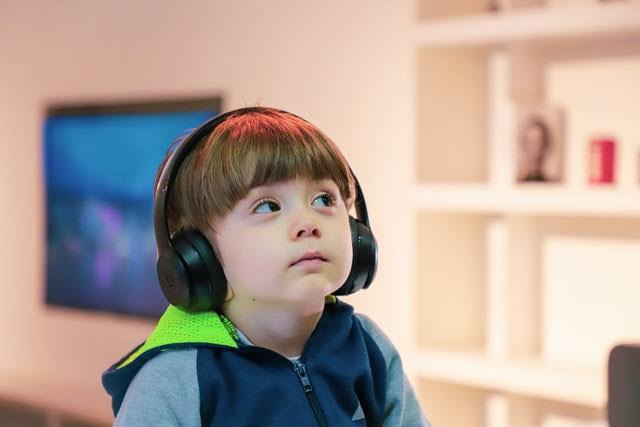
 Engage them in music at every instance: Studies show that children with autism can understand both simple and complex emotions in music and are more responsive to sensory stimulation compared with other children especially in music, even over speech or noise.
Music can positively impact children with autism in diverse ways. You can use songs to emphasize speech in children with autism who struggle with language. One technique is to sing with vocabulary cards in order to teach vocabulary skills, you can also play music videos like COCOMELON that teach all these using music. Singing can considerably enhance language skills in students with a type of autism that has language delays.
Music can be used to help a child with autism recollect important information when it is linked with a musical sound, like a melody or rhythm.
One critical study found that music can be used to focus students’ attention, keep those with disabilities on track and decrease their anxiety from stress. I once had an autistic patient who could hardly focus but would pause at the sound of a rhythm made, master it and give you the exact way he heard it.

 If you are musically inclined, try engaging them using music elements in the simplest form.
Music elements such as pitch, melody, harmony, rhythm and so on. When children listen to a piece of music, the combination of musical elements are in it. However, some children with autism are auditory sensitive and it makes them experience a lack of forbearance for sounds.
You can help them by using separate musical elements to simplify their music. For example; start with a song, you as the caregiver can try teaching in stages by isolating pitches on the piano first. As they get comfortable with it, you can slowly introduce the other elements one at a time. be sensitive to know when they are not interested in one element and when they are interested in another.

 Compose songs with the child’s name as song title, it has a way of building self-confidence. For example, in this part of the world, many people have native names. If your child has a native name, you can make use of the name interpretation to compose a song and still mention his or her name in it. It gives a feeling of being loved, being known and all the god feeling.

 Employ music to help the aggression they feel. Autistic children are most times frustrated because of the difficulty they experience in expressing themselves but music can help as it can keep them calm by lessening their feelings of anger. Try different genres of calming and sensory music, see what works best for your young one.

This is not an exhaustive list on how to utilize music in helping children living with autism and like I mentioned earlier, it’s a journey you should take at your own pace encouraging yourself and your child as you walk through it. This journey will be both beneficial to you and your child.
You are doing a great job and I’m rooting for you always.

Need counsel? Need help or have questions? Feel free to drop them here or if for confidentiality’s sake you don’t want to, kindly write to me; mercykayt@gmail.com.


Thank You.
LINKS:

O N E – S I D E D

Heaviness is what I’d have loved to title this ‘cos I could literally touch this in the hearts of caregivers this past week.
From the mothers whose kids had difficulty in breathing and were battling with issues at home to the mother who looked clueless not knowing whether to cry or just do something else to the mother who could still manage the occurrence to the Father who was pissed off with his wife to the parents who did not know where the money for the next medication will come from but experienced a miracle right there in my presence.

You are probably wondering how I knew all of these case scenarios? Well let’s just say I administered music for a longer time this very day so I could see deeper, I could see unhappy and happy homes, confused and hopeful people but let’s just say the negatives were more.
They were caged with a lot of worries that had kept them mute, I knew they needed to release whether by speaking or sighing or nodding to the truth that all was going to be well.

Under my breath I asked God to heal hearts, homes and their children because I could barely bring them to a point of singing talk less of talking, everyone’s head was bent deep in their problems.
The only thing I knew to do was to administer music without expecting any response, I serenaded the atmosphere with music for a long time.
I sang these words;
I no go fear
I no go worry
This too will pass and
It won’t be long.

While I sang I saw some nod, I saw others rest their heads to sleep over everything bothering them, I saw babies sleep soundly and a baby grin widely at me❤
Right in my presence, a good Samaritan walked in and gifted two out of the mothers with money, these mothers were having a hard time containing the fact that their kids were ill but somehow this kindness shown by the Good Samaritan made them hopeful.
What a miracle! I thought to myself

I learnt a vital lesson from this session is that sometimes the only way to release in the atmosphere of music might be through a smile, nod, sigh and rest. Sometimes it’s okay not to have them voice out their concerns but to allow it die a deep death within them such that it never resurrects again.

This is the #DiaryofAnAspiringMusicTherapist, Episode 8

You mean a lot to me and I love reading from you!

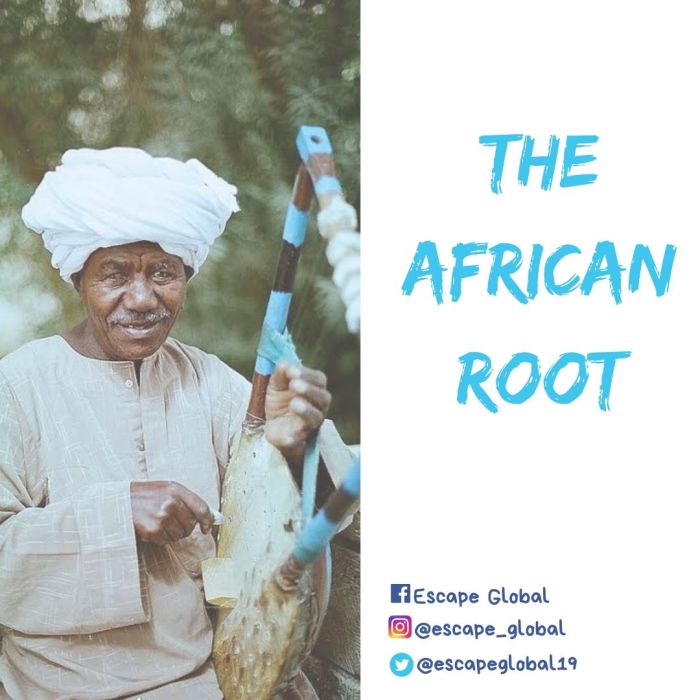
The African ROOT

I am sure in the last one week we have had questions of whether this kind of therapy has any root in Africa as a whole. Whether or not there is a traceable history of Music Therapy in Africa is what is about to be unveiled here.

Goodnews! Music Therapy in Africa is traceable, its as old as tradition itself, it may not have been documented or even given a definite name as we have it now but it has long been existent.

Just a background knowledge of Africa for my non-African followers, Africa is the second largest continent in the world with about 1.2 billion people of the world’s population as of 2016. Africa has a very rich and beautiful cultural heritage, among the many continents in Africa are Nigeria, Egypt, Republic of Benin, Rwanda, Republic of Congo, Kenya and so on.

I’m sure by now you already have a little background knowledge of the continent Africa. There has been a question if Music Therapy has ever existed in Africa. Learning about this, I was thrilled at such rich`history Africa has and in this post I will be sharing a few.

In Africa, music is seen in every stage of life, from birth to death. Every transition or call it change in status calls for the use of music, from birth to adulthood to marriage to death.

The inception of Music Therapy in Africa has been since Ancient times, although there were few written records, most of the information have been by oral transmission which is passed down from one generation to another.

In Ancient Egypt, ancient man used singing and dancing as a part of his rituals to throw out the evil spirits, which were waiting to attack him with several diseases. Abidos Temple was the biggest center of medicine in Ancient Egypt and the priests treated diseases with chant. It was discovered that there was a saint called Abu Terbo who treated epilepsy using pipes chant. Egyptian priests and physicians alluded music as medicine for the soul, chant therapies were also included as part of the medical practice. Below this post is a link to a video of Ancient Egypt healing Music, listen and let me know your thoughts about it.

In some other parts of Africa also, Music Therapy was also instrumental in TRADITIONAL HEALING. For example in Nigeria, it was embedded in culture and was mostly performed by native doctors. For Non-Africans, NATIVE DOCTORS are not the same as HOSPITAL DOCTORS, they are doctors who use traditional prescriptions and carry out rituals also. These Native Doctors had specialty in healing with the use of ritual music.

Traditional healing had a lot to do with SPECIFICS, that is there had to be a SPECIFIC song to be sung, a SPECIFIC time of the day or night and a SPECIFIC traditional instrument had to be used for this purpose, it was not just done without restraints.

Professor Mereni, the foremost forerunner of Music Therapy in Nigeria conducted a research in the town Irigwe in Plateau state of Nigeria. He discovered that the traditional medicine man called Nevo prescribed the “Sa rije” ritual, this is a ritual characterized by music and dance and is used as treatment for women suffering from a syndrome known as “Ci rima”.

A patient with “Ci rima” syndrome had the following symptoms; prolonged abnormal pains, vomiting, persistent diarrhea, hallucination, fever and prolonged loss of appetite. While this happens, the “Nevo” prescribed the music ritual ceremony known as “Sa rije”. It was then used in the treatment of the woman suffering from Ci rima syndrome. It is said that certain patterns of music were used as the Nevo observed the patient and gave traditional treatment.

This sums up the fact that Music Therapy has been long existent and also it wasn’t just administered anyhow, they had to follow traditions and cultures.

Despite the viability of Music Therapy since Ancient times, it is one that is still not recognized in many parts of the continent Africa today.

Let me know what you think about this post also in the comment section below. I love reading from you!

Thank you for reading through. Lots of Love!

SOURCES: https://voices.no/community/index.html?q=country-of-the-month%252F2012-music-therapy-nigeria

http://citeseerx.ist.psu.edu/viewdoc/download?doi=10.1.1.508.4197&rep=rep1&type=pdf https://voices.no/community/index.html?q=country-of-the-month%252F2005-music-therapy-egypt

VIDEO: https://www.youtube.com/watch?v=s2FW2EairNU

The Root

History is needed to understand the field of MUSIC THERAPY. Just like every other thing in life did not just happen but was instigated by some persons, events, situations and so on so also is MUSIC THERAPY.

The History of Music and its affiliation to humanity goes way back to the beginning of time; the more the world becomes civilized, the more it affects people and their use of Music.

The early Native Americans, this was Ancient Civilization, they used music in communicating with their gods and nature, they also used this as a healing tool and a way to have camaraderie within their communities.

They were in the habit of coming together as a tribe to chant, dance and pray for their loved ones who were sick. How sweet you might say!

Still in Ancient civilization, there was Mania and Catharsis, they were popular terms in the ancient Greece. Mania had to do with mental illness while Catharsis had to do with the purging of soul through music.

Music in Ancient Greece was mainly used for purgative effect and to transit into the dreamland in such a way that they could or would return with pleasant dreams (I think this happens to me too). The flute was a major musical instrument used for this purpose.

The Pythagoreans employed a daily routine of music therapy. They enjoyed music before retiring to bed after a long day and it helped them to calm down, it also gave them a good night’s sleep with pleasant dreams. At the dawn of a new day, they performed special compositions on the lyre, which helped them to jiggle the daydreams from the night before and prepare for the intense rhythms of the day. The Pythagoreans probably had knowledge of the relationship between musical rhythm and temperament, and applied musical prescriptions based on their circumstance.

In addition to therapeutic songs from Ancient Greece were Curative songs called Epodes. This was more like a magical spells and it was said to have been instrumental in healing heartbreaks. So you know that songs for heartbreaks didn’t just start today.

At this point Music Therapy had not been defined yet as a professional practice until the end of World War 11.

This is why the American Music Therapy Association (AMTA) gives credit to Ancient Civilization for the start of Music Therapy, in their words, “The idea of music as a healing influence which could affect health and behavior is as least as old as the writings of Aristotle and Plato”

At the end of World War 11, Music Therapy became a recognized treatment in the United States, between I read a very interesting story on this and I hope to share both the write up I have done on it and the video I was privileged to see.

Back to my story or history as the case may be, Nurses and Doctors recognized how music helped patients who had severe physical and emotional trauma due to the war.

Because of this, they thought to consider the start of an Institute of Education where people who were passionate about the field of Music Therapy could professionally practice music in a medical society.

This became the official start of Music Therapy!

Okay! Let me know what you think about this post as I am looking forward to your questions, contributions and critique. I love reading from you.

Thank You!

SOURCES: http://www.greece-is.com/music-therapy-in-ancient-greece/

https://petersonfamilyfoundation.org/music-therapy/science-music-therapy/

MY PROJECT JOURNEY 2

Research on music therapy shows that listening to music engages sub-cortical and cortical areas of the brain. Music has been shown to stimulate the brains’ primary engine of human capacity, exercises attention, evokes emotional response and stimulates the central nervous system. It also appears to activate the human mirror-neuron system, supporting the coupling between perceptual events (visual or auditory) and motor actions (leg, arm/hand, or vocal or articulatory actions). At one time, theories of human brain development argued that there was little or no growth of brain cells after age 30 but recent studies of music and the brain have shown this view to be erroneous. The brain is a plastic organ and music has the power to shape the brain’s development into later life. The implication of these findings is huge. Providing opportunities for people to experience music in many settings can have a profound impact on their healthy development.

Music has long been recognized as a powerful force in rehabilitative treatment, used clinically to address impairments in motor function, language, cognition, sensory processing, and emotional disturbances that can result from brain injury. It has been used successfully to induce cognitive repair in patients with stroke, Parkinson’s disease, cerebral palsy, or traumatic brain injury. Indeed, music has the potential to “fix” the brain, by providing an alternative entry point into a “broken” brain system to remediate impaired neural processes or neural connections.

Back to my story, I went on to administer music therapy to this young girl. I switched on the music on my phone and she began loosening up, then I picked up my guitar and started singing. Before I could say jack, her eyes were dried and she reached for a pen and began writing. For autistic children, writing is usually a challenge so you can imagine how much my heart leaped with joy when she began writing herself.

We can imagine that her mum tried using nonmusical tones to communicate with her but it turned sour but at the sound of music she not only did what she wanted her to do but she did more by writing. This amplifies research findings that Music is read differently in the brain than nonmusical tones.

Amina returned home happy and I returned curious about this aspect of Therapy and eager to raise an awareness of it’s potency.
Stay glued to my blog as I enlighten you every week on Music Therapy.

MY PROJECT JOURNEY 1

I started my project early enough and I had to visit the hospital which was situated in Lagos a number of times for approval, that meant I had to travel from time to time since my school was in Ile-Ife Osun State. Traveling didn’t feel like a burden to me because I was eager to see the wonders of music.
I visited the hospital about two times before my project work with them was approved and they asked that I be posted to the children section of the Federal Neuro-Psychiatric Hospital which is situated in Oshodi, Lagos State.
I was slated to work with children ages 4-10 years but during the course of the project I worked on teenagers too.
One experience that stood out for me was an autistic child who I would love to give the fictional name, Amina. Amina is a child of 10 years who has lived with autism since she was a year old. Week-in, week-out, she came with her mum to the Federal Neuro-Psychiatric Hospital Annex at Oshodi to see the doctor, get medications , attend educational therapy and what have you.
So this day, she came in sobbing and I had so much empathy on her that I would have shed a tear. Her mum said to me, “She likes covering her face whenever she steps into a room filled with people but I discouraged her from doing this which leads her to always cry”. This scenario is common with children with this disorder because of their poor social skills
I’m sure you might be curious as to what happened next, how I was able to manage an autistic child who was sobbing, knowing the struggles of children who live with this ailment…


Watch out for my next blog post.

Have a great week ahead!

WHY MUSIC THERAPY?

I ask myself this question every time, today again I’m still asking myself same question only that I’m taken down memory lane this time around.

In 2013 while seated in a class, we had just resumed into the university and the fire to have an amazing CGPA was burning in us, well maybe not everyone but I was burning with that fire to do better than I have done all my life.

We had this course MUS 101 this very day and it had to do with the introduction to Music, I was so eager to learn because I knew no Jack in music except singing. While my lecturer was lecturing on the different kinds of music, she got to the therapeutic side of music and mentioned that this kind of music can affect the mood of a person, it can make you sober, hyper and can even make a person decide to commit murder.

In my mind I’m like are you for real? Then the interest started, I felt I had found something different that I could do with music other than organise concerts, sing in a choir, go for shows, release an album and what have you but sorry to disappoint you it only took a little while, the fire died😣.


Fast forward to my 300 level 2nd semester I began thinking frantically about what my project topic will be, I wasn’t jelled by the usual and I wanted something that I’d enjoy doing and wouldn’t feel like a burden to me.
This day I was in my aunt’s place and for no reason I passed by on a scene they were seeing on African Magic and this guy was just talking about the potency of music in the healing of Psychiatric Patients. Boom! That was it, I found it and went ahead to write my options to the department and fortunately for me I got it.


I was going to be working on the Effect of Music Therapy on Psychiatric Patients using Federal Neuro-Psychiatric Hospital Yaba as case study.
My story is getting too long, maybe I should leave your mind to wonder what happened next and how I was able to manage Psychiatric Patients…

Catch you in the next blog post…