S H E W R O T E

One experience that stood out for me in a mental health hospital was that of an autistic child who I would love to give the fictional name, Amina. Amina was a child of 10 years who had lived with autism since she was a year old. Week-in, week-out, she came with her mum to the Hospital to see the doctor, get medications , attend educational therapy and what have you.

So this day, she came in sobbing and I had so much empathy on her that I would have shed a tear. Her mum said to me, “She likes covering her face whenever she steps into a room filled with people but I discouraged her from doing this which led to an outburst of tears”. This scenario is common with children with this disorder because of their poor social skills.

I’m sure you might be curious as to what happened next, how I was able to manage an autistic child who was sobbing, knowing the struggles of children who live with this ailment…

Research on music therapy shows that listening to music engages sub-cortical and cortical areas of the brain. Music has been shown to stimulate the brains’ primary engine of human capacity, exercises attention, evokes emotional response and stimulates the central nervous system. It also appears to activate the human mirror-neuron system, supporting the coupling between perceptual events (visual or auditory) and motor actions (leg, hand, or vocal or articulatory actions).

At one time, theories of human brain development argued that there was little or no growth of brain cells after age 30 but recent studies of music and the brain have shown this view to be erroneous. The brain is a plastic organ and music has the power to shape the brain’s development into later life. The implication of these findings is huge. Providing opportunities for people to experience music in many settings can have a profound impact on their healthy development.

Music has long been recognized as a powerful force in rehabilitative treatment, used clinically to address impairments in motor function, language, cognition, sensory processing, and emotional disturbances that can result from brain injury. It has been used successfully to induce cognitive repair in patients with stroke, Parkinson’s disease, cerebral palsy, or traumatic brain injury. Indeed, music has the potential to “fix” the brain, by providing an alternative entry point into a “broken” brain system to remediate impaired neural processes or neural connections.

Back to my story, I went on to administer music therapy to this young girl. I switched on the music on my phone and she began loosening up, then I picked up my guitar and started singing. Before I could say jack, her eyes were dried and she reached for a pen and began writing. For autistic children, writing is usually a challenge so you can imagine how much my heart leaped with joy when she began writing herself.

You can imagine that her mum tried using non-musical tones to communicate what she wanted her to do and it turned sour but at the sound of music she not only did what she wanted her to do but she did more by writing.

Amina returned home happy and I returned curious about this aspect of Therapy and eager to raise an awareness of it’s potency.

This is #TheDiaryofAnAspiringMusicTherapist, Episode 10

In view of what has been happening in recent weeks across the nations of the earth and the instruction to stay indoors to avoid the spread of the coronavirus, #TheDiaryofAnAspiringMusicTherapist will be on hold. We strongly believe this will end soon.

Please remain obedient to every rule given by our individual government authorities.

I look forward to reading from you and catch you soon!
O N E – S I D E D

Heaviness is what I’d have loved to title this ‘cos I could literally touch this in the hearts of caregivers this past week.
From the mothers whose kids had difficulty in breathing and were battling with issues at home to the mother who looked clueless not knowing whether to cry or just do something else to the mother who could still manage the occurrence to the Father who was pissed off with his wife to the parents who did not know where the money for the next medication will come from but experienced a miracle right there in my presence.

You are probably wondering how I knew all of these case scenarios? Well let’s just say I administered music for a longer time this very day so I could see deeper, I could see unhappy and happy homes, confused and hopeful people but let’s just say the negatives were more.
They were caged with a lot of worries that had kept them mute, I knew they needed to release whether by speaking or sighing or nodding to the truth that all was going to be well.

Under my breath I asked God to heal hearts, homes and their children because I could barely bring them to a point of singing talk less of talking, everyone’s head was bent deep in their problems.
The only thing I knew to do was to administer music without expecting any response, I serenaded the atmosphere with music for a long time.
I sang these words;
I no go fear
I no go worry
This too will pass and
It won’t be long.

While I sang I saw some nod, I saw others rest their heads to sleep over everything bothering them, I saw babies sleep soundly and a baby grin widely at me❤
Right in my presence, a good Samaritan walked in and gifted two out of the mothers with money, these mothers were having a hard time containing the fact that their kids were ill but somehow this kindness shown by the Good Samaritan made them hopeful.
What a miracle! I thought to myself

I learnt a vital lesson from this session is that sometimes the only way to release in the atmosphere of music might be through a smile, nod, sigh and rest. Sometimes it’s okay not to have them voice out their concerns but to allow it die a deep death within them such that it never resurrects again.

This is the #DiaryofAnAspiringMusicTherapist, Episode 8

You mean a lot to me and I love reading from you!

The Music Miracle: Instant or Process

Every moment in a Music Therapy session is a miracle, why because you see life jerk dead cases, you see impossible cases bring hope.

Tinuola a FIRST class graduate of a prestigious university in Nigeria had a fatal accident on the Lagos-Ibadan expressway, this accident was meant to end her life but somehow she survived as some good Samaritans came to her rescue right in time.

She was rushed to a nearby hospital, because of the state of the hospital she was unattended to for some few minutes even though it was glaring that it was an emergency case. This complicated issues as she bled a lot and was in pain.

Alas! She was attended to and a lot of checks, tests, drips and treatment was administered. After the doctor carried out the test, he discovered that she might not be able to walk with her legs again because it had been badly damaged by the accident which meant she had to be on a wheel chair for as long as…

Tinuola wept bitterly knowing this was the time she had to be there for her parents who were doing averagely well, she knew there were lots of responsibilities on her and she there wasn’t enough fund to even take care of her bills. Thinking of this day in day out was both depressing for herself and her family.

She got lots of job offers but she couldn’t walk and work because of the condition she was in. This day a music therapist who earlier volunteered to work at the hospital took note of her and patiently listened to her story, this welled up empathy in him and thought to himself, I need to work on this.

Work started and then this Music Therapist played calming music that would make her mind wander away from the pain, he would also put the stereo on while he was away just to help her express emotions through music. She expressed her fears in tears, the pain of never having to fulfill her dreams and the feeling of what her condition might be causing the family and as days rolled by, she find herself jerking away from all of the fears.

The Music Therapist taught to himself, this might be a good time to work on your mobility, so everyday he made use of his violin to play marching rhythms and on other occasions, he used his guitar in playing marching rhythms, encouraging her with support from the Physiotherapist to move step by step.

This happened for about a month or thereabout and everyday her legs were gradually strengthened, she could stand 2 minutes and could move a short while.

In a month’s time, she found herself moving so well and of course was later discharged.

I shared this story to let you know that the miracle in Music Therapy does happen in an instant and also happens in a process, it is most times a process, a Music Therapist sees the need to first begin working on the mind of the patient, ripping him or her of the fears and the walls that have been put up due to the accident or an ailment. The Miracle of seeing a patient jerk away from their fears might be so instant, in say maybe 4 or 5 hours thereabout or may even be more.

Let me make it more practical, flash your mind back to probably a time you were so down emotionally and a lot of things made you so fearful about life, putting on this music just all of a sudden brought you succor, making hope come alive in your heart. Can I get a witness on this? That moment when music jerked you off your fears, made you see better and hope again was a miracle produced by music.

However, many a times it is a long process (Had an experience like this in the hospital that I might probably share one of these days). Most times the miracle is in following through step by step.

A number of persons say to me, so patients just get healed like that with one strum on the guitar and I’m like No most times it is a process, sometimes tiring for the Music Therapist and might require them being there every time but always fulfilling at every stance of a miracle.

I hope you got something from this post. Below is a link to a video that helps you understand this better, kindly watch to the end.

Let me know what you think about this post and I love reading from you

VIDEO: https://www.youtube.com/watch?v=FwfswoGxlNQ&t=600s

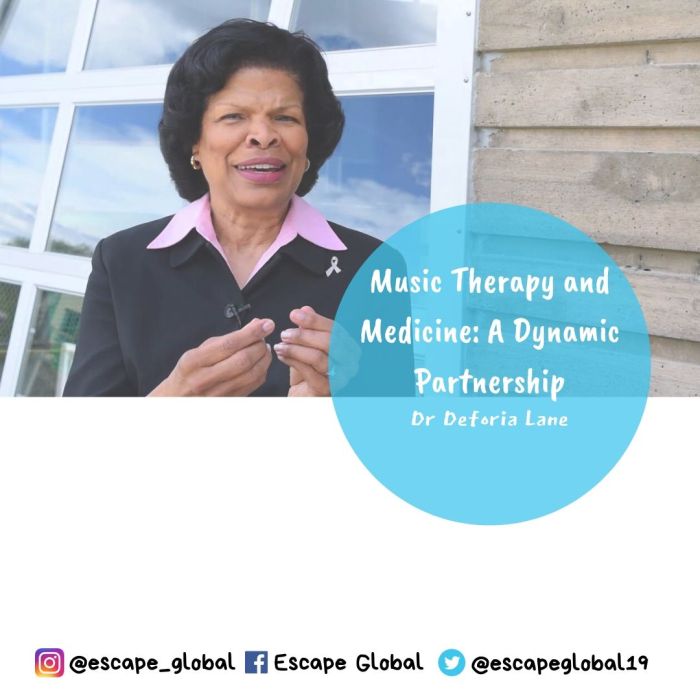
Music Therapy and Medicine: A Dynamic Partnership

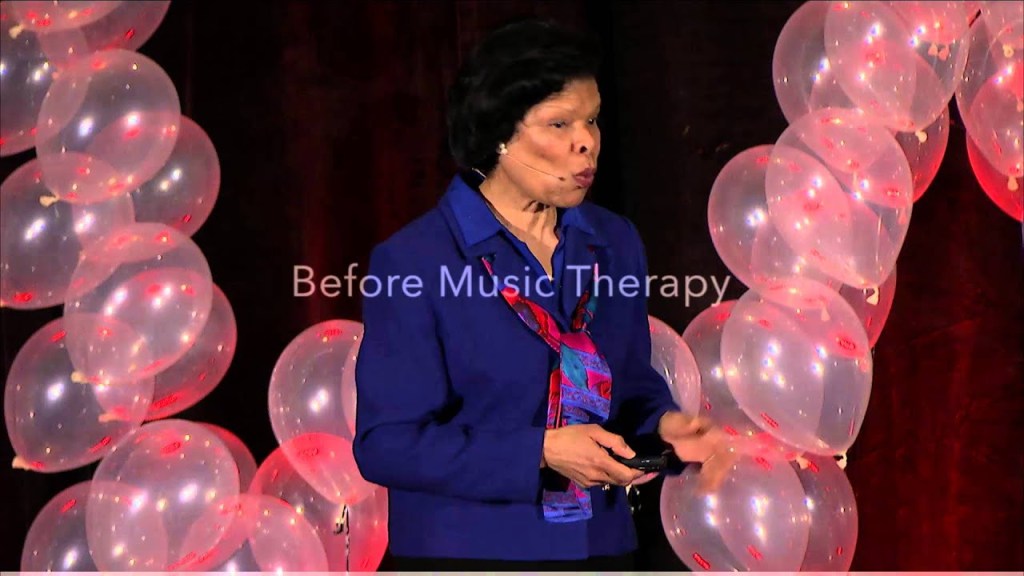
Today I do a review of a TEDTalk by Dr Deforia Lane that I love so much and don’t think I’ll ever stop loving. Dr Deforia shares on Music Therapy and Medicine being a dynamic Partnership. This Ted Talk was done in 2016.

Honestly, this might not be your kind of perfect review but be sure to gain something, you’d see the synergy that can occur with Music Therapy and Medicine. This review is also meant to be long but I’d pick one or two things to expand on here so it doesn’t get excessively long, I might put up the rest sometimes in the nearest future.

Before I jump right into this let me give you a background knowledge of who Dr Deforia is, she is a Resident Director of Music Therapy at the University Hospitals of Cleveland Ireland Cancer Center and holds a Ph.D. in Music Education from Case Western Reserve University. She has designed and implemented music therapy programs for diverse populations. More importantly is that she is a cancer survivor which I believe must have inspired her to be passionate about the field of Music Therapy. She is the first music therapist to receive a grant to study music’s therapeutic effects on cancer patients.

Music Therapy and Medicine are two separate fields yet have this dynamic partnership that can improve wellness in our society, in this Review I’m not in any way about to bug you with lots of theory.

Music is in itself a connecting factor, it could by connection make a heart pump with blood again and just like the the red and yellow wire coming together to give light, it could light up a place or heart. The synergy of Music Therapy and Medicine makes it even more beautiful.

Dr Deforia tells of the story of a 20 year old lady who was pregnant and was brain-dead, I mean inactive in this case, she was taken to the Intensive Care Unit with the baby in her, if you are a Nigerian you’d understand that one of the most scary statements to hear is that a loved one’s case has deteriorated to the point of being taken to the Intensive Care Unit, you’d understand how expensive it is to have a person here.

Back to my story, Dr Deforia developed cold feet when called upon to administer Music Therapy to the child in this young lady’s womb because they figured out that since this lady was close to death’s door, there was no way she could push forth her child and of course they didn’t want to lose the baby also. Deforia looked at the protruded belly and began singing “He’s got the whole world in His hands” and this baby began to dance under her fingers, so much courage was infused by this happening. She moved to a fast-paced song and the baby danced faster under hands and His heart went up immediately.

Understand that this child was about to die because his mum could not stimulate his coming to the world because she was brain dead and as a matter of fact was on life support. The Doctors and Nurses knew there was a high possibility of losing this child if something wasn’t done. At this point, the drips, tests and injection couldn’t work not because it was or is useless but because it wasn’t in their place to do so.

It is safe to say that human’s heart beat responds quickly to Music Therapy than any other form of therapy. It is also safe to conclude in the words of Dr Deforia that life on the inside responds to music on the outside. Music Therapy acts as stimulant in dead cases.

I strongly believe that for a synergy or a dynamic partnership to happen between this fields in this part of Africa, it must come with appreciating each field’s wiring and knowing where and when to come in to improve human wellness.

I have always been of the opinion that there is so much we can do when we collaborate. So kindly think of this post as a collaboration. In this, we understand that one doesn’t dull the other’s shine or makes the other feel less important. Both fields are equally important, playing its role in the wellness of patients.

I also believe that Music Therapy and Medicine’s partnership will be a major stress reliever in this part of Africa. I mean Doctors and Nurses in this part of Africa are amazing honestly, how they do everything despite the weather sometimes, the many demands on them and lots more.

I’d put the link to the TED Talk at the end of this post so you can see the video yourself, have a practical feel or side to Music Therapy and also let me know what you think.

SOURCES: https://ww5.komen.org/BreastCancer/DeforiaLane.html https://www.verywellfamily.com/reasons-for-therapeutic-termination-2371295

VIDEO: https://www.youtube.com/watch?v=LGnWyS2Y4r8

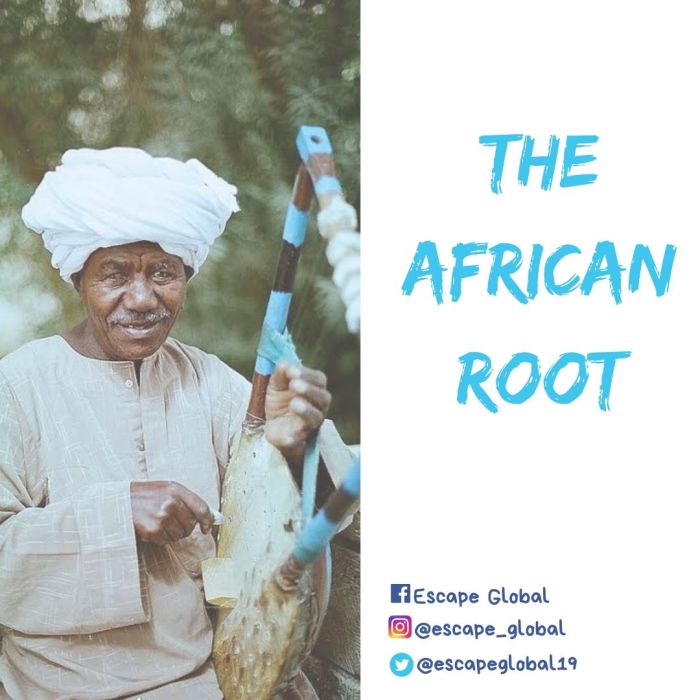
The African ROOT

I am sure in the last one week we have had questions of whether this kind of therapy has any root in Africa as a whole. Whether or not there is a traceable history of Music Therapy in Africa is what is about to be unveiled here.

Goodnews! Music Therapy in Africa is traceable, its as old as tradition itself, it may not have been documented or even given a definite name as we have it now but it has long been existent.

Just a background knowledge of Africa for my non-African followers, Africa is the second largest continent in the world with about 1.2 billion people of the world’s population as of 2016. Africa has a very rich and beautiful cultural heritage, among the many continents in Africa are Nigeria, Egypt, Republic of Benin, Rwanda, Republic of Congo, Kenya and so on.

I’m sure by now you already have a little background knowledge of the continent Africa. There has been a question if Music Therapy has ever existed in Africa. Learning about this, I was thrilled at such rich`history Africa has and in this post I will be sharing a few.

In Africa, music is seen in every stage of life, from birth to death. Every transition or call it change in status calls for the use of music, from birth to adulthood to marriage to death.

The inception of Music Therapy in Africa has been since Ancient times, although there were few written records, most of the information have been by oral transmission which is passed down from one generation to another.

In Ancient Egypt, ancient man used singing and dancing as a part of his rituals to throw out the evil spirits, which were waiting to attack him with several diseases. Abidos Temple was the biggest center of medicine in Ancient Egypt and the priests treated diseases with chant. It was discovered that there was a saint called Abu Terbo who treated epilepsy using pipes chant. Egyptian priests and physicians alluded music as medicine for the soul, chant therapies were also included as part of the medical practice. Below this post is a link to a video of Ancient Egypt healing Music, listen and let me know your thoughts about it.

In some other parts of Africa also, Music Therapy was also instrumental in TRADITIONAL HEALING. For example in Nigeria, it was embedded in culture and was mostly performed by native doctors. For Non-Africans, NATIVE DOCTORS are not the same as HOSPITAL DOCTORS, they are doctors who use traditional prescriptions and carry out rituals also. These Native Doctors had specialty in healing with the use of ritual music.

Traditional healing had a lot to do with SPECIFICS, that is there had to be a SPECIFIC song to be sung, a SPECIFIC time of the day or night and a SPECIFIC traditional instrument had to be used for this purpose, it was not just done without restraints.

Professor Mereni, the foremost forerunner of Music Therapy in Nigeria conducted a research in the town Irigwe in Plateau state of Nigeria. He discovered that the traditional medicine man called Nevo prescribed the “Sa rije” ritual, this is a ritual characterized by music and dance and is used as treatment for women suffering from a syndrome known as “Ci rima”.

A patient with “Ci rima” syndrome had the following symptoms; prolonged abnormal pains, vomiting, persistent diarrhea, hallucination, fever and prolonged loss of appetite. While this happens, the “Nevo” prescribed the music ritual ceremony known as “Sa rije”. It was then used in the treatment of the woman suffering from Ci rima syndrome. It is said that certain patterns of music were used as the Nevo observed the patient and gave traditional treatment.

This sums up the fact that Music Therapy has been long existent and also it wasn’t just administered anyhow, they had to follow traditions and cultures.

Despite the viability of Music Therapy since Ancient times, it is one that is still not recognized in many parts of the continent Africa today.

Let me know what you think about this post also in the comment section below. I love reading from you!

Thank you for reading through. Lots of Love!

SOURCES: https://voices.no/community/index.html?q=country-of-the-month%252F2012-music-therapy-nigeria

http://citeseerx.ist.psu.edu/viewdoc/download?doi=10.1.1.508.4197&rep=rep1&type=pdf https://voices.no/community/index.html?q=country-of-the-month%252F2005-music-therapy-egypt

VIDEO: https://www.youtube.com/watch?v=s2FW2EairNU