ways to improve motor skills in a cerebral palsy patient

Last week was World Cerebral Palsy day and I thought to do a post that will be helpful to caregivers of Cerebral Palsy patients, children especially.

Cerebral palsy is a motor disorder that is caused by damage to the developing brain. It primarily affects an individual’s movements, balance, and posture. I want to show you practical ways to help a child who has cerebral palsy;

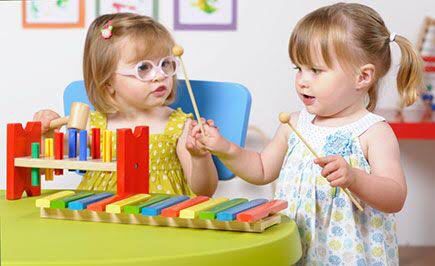
👉 Teach the child to play a musical instrument, this is what it’ll do, it will enhance flexibility and dexterity, which will in turn help refine gross and fine motor skills. A small drum with sticks for example or a small tambourine or a maracas. If you can not teach the child to play a musical instrument, you can employ a tutor if possible who is patient and capable of teaching the child.

👉 Encourage and model walking, dancing and doing exercises while listening to music, it will help strengthen the child’s muscles. It’s technically called Rhythmic auditory stimulation in music therapy, it is the synchronisation of sound and movement to facilitate improvements in biologically rhythmical functions. This rhythmic nature of music also helps to organize the child’s gait, it will teach movements timing to the beat of the music. For example modelling synchronisation of steps to lively music to improve walking speed, you can begin on a slow tempo and increase speed gradually if you are playing a live music and not a recorded one.

👉 The last but the most important is to engage in repetitions, when the results of the first try is pleasing, do not give in to the temptation of relaxing but keep on and on because the human brain is incredibly adaptable, but needs repetitive activities or exercise to become familiar with new functions.

I really looked forward to putting up a video that demonstrates what I have shared here but somehow I can not, please look out for it on my Instagram pages next week; @mercykaynimi or @escape_global. Don’t stop being grateful, I’m rooting for you always!

Kindly let me know in the comment box if this post was helpful.

Need counsel? Need help or have questions? Feel free to drop them here or if for confidentiality’s sake you don’t want to, kindly write to me; mercykayt@gmail.com.

Thank You.

HOW TO HELP A CHILD WHO HAS SPEECH DISORDER USING MUSIC THERAPY

Children who have speech disorder may not learn or master language milestones as other children.

Few years ago I had a patient who had speech disorder, on first meeting he was quite curious to know how the guitar is being played, he also wanted to know how to accompany his voice with it so I gave him the guitar and taught him the placement of the G Major chord, he was able to try it out though his hands were not firm on it, I also taught him the placement of his hands to make the E Minor. He was able to interchange both chords but not conveniently. He sang and played though it felt like noise to everyone around but he enjoyed it and did not feel like returning home with his parents. In the atmosphere of music, he could vocalize.
This experience made me realize the need to teach few simple and helpful ways of working on a speech disorder.

👉 First is to allow your young one listen to music, it helps boosts cognitive functioning, put it on at different times of the day.
A particular study done in 2010 revealed that Children who listened to music closed the developmental gap faster than those who had no music therapy. Those with speech delays moved faster toward correcting speech or improving communication skills at all ages, from toddlers with speech delays to older children. The balanced rhythm of the music helps the child match the words to the beat, providing more measure than normal speech, and therefore helping the child learn how language works trouble-free.

👉 Possibly get a mouth organ to help in breath production and by mouth organ I mean the harmonica or a recorder.

👉 Engage in vocalization of vow and consonant sounds alike, I did a video exemplifying this on my Instagram page, be sure to check it out @mercykaynimi or @escape_global

👉 Engage in the turn-taking technique singing simple and familiar songs with short lyrics. For example, Twinkle Twinkle Little star. I exemplified that too in the video I made on my Instagram page.
The child will be able to pick the words of the shorter song better and will more readily repeat them to the beat.

👉Playing an instrument, such as an acoustic guitar, it also helps the cognitive development of children just like the story of the patient I shared earlier in this post.

👉 Make sure also that everything you are teaching is age appropriate and more importantly be grateful for every process, don’t compare your journey with another.

You are doing very well and I’m rooting for you!

Do let me know in the comment box if this post was helpful.

Need counsel? Need help or have questions? Feel free to drop them here or if for confidentiality’s sake you don’t want to, kindly write to me; mercykayt@gmail.com.

Thank You.

HOW YOU CAN TEACH A SPECIAL NEED CHILD WITH NO Background in music

I have no background in music and I want to teach a/my child with special need.
I know the previous post may have got you wondering how you can teach your child music with no music inclination. I will be sharing few simple steps on how to teach your young one in such a way that it is beneficial to both you and them.


The first thing I’ll like to mention which I mentioned in my previous post is to OWN YOUR JOURNEY, I apologize for reiterating it but if you must make the most of this journey then you will part ways with impatience, comparison, ingratitude and be companions of gratitude any day any moment.


Focus on knowing your CHILD(REN): When preparing to teach music to your child(ren), focus on knowing them, understanding their personalities, what they love and will tend to. Knowing them means you will have to recall the times when they engaged in music, what their response was like, if they love calm or fast music, if they enjoy rhythm, whether they have ever been fascinated by a musical instrument, if there is any genre of music that makes them aggressive or feel frustrated. All these are to let you know that you must be a keen observer, it will help you know which to tone down on and which to elevate. Ask them questions and don’t feel bad if they don’t like what you envisaged them liking.


Focus on learning a musical instrument, be it Voice, Piano, Guitar and so on. Do not dabble into too many musical instruments, you can download videos online to learn, explore yourself and all other spontaneous ideas that might come in the process and as you learn, try engaging your child with it. The goal is to learn while they learn.


Keep things simple with your child. your child isn’t an adult that you would want to please by being prim and proper, you can say things like “Honey you know mummy or daddy is just learning to figure this out so let’s just go with the flow”. Your child will appreciate the commitment, vulnerability and simplicity you put into it. I remember when I just started playing the guitar and was visiting the hospital, because I didn’t know much I always wanted to cringe, then I realized from my interactions with each kid that they didn’t care, they just wanted the simple thing I could play then.


As you grow in teaching them, avoid being rigid, kids love to play and explore a lot and sometimes you might have a bucket list of how you want to teach music but they are just concentrating on one. I used to ‘overprepare’ and then when I begin sessions, they just always have something else they love to do. Do not rush them, give grace and watch how they explore just the one you’ve taught them. the joy is not in how many lessons you can pump down their brain but in the journey that is moving steadily. Be grateful!


Watch sessions on YouTube where children with special needs are engaged in Music Therapy, it will boost your confidence and you’ll have lot of innovative ideas on how to utilize music in helping your young one.


Paste colourful postcards containing illustrative affirmations in your music space. Affirmations like; I am smart, I am well-behaved, I sing well, I play my musical instruments well and so on. Just be creative about it.


Finally, as you teach them the little you’ve learnt, don’t stop learning also. It’s never bad to learn on the job, some days might seem frustrating but please do not give up, give grace.
You are doing so well and I am rooting for you!


Do let me know in the comment box if this post was helpful.
Need counsel? Need help or have questions? Feel free to drop them here or if for confidentiality’s sake you don’t want to, kindly write to me; mercykayt@gmail.com.
Thank You.
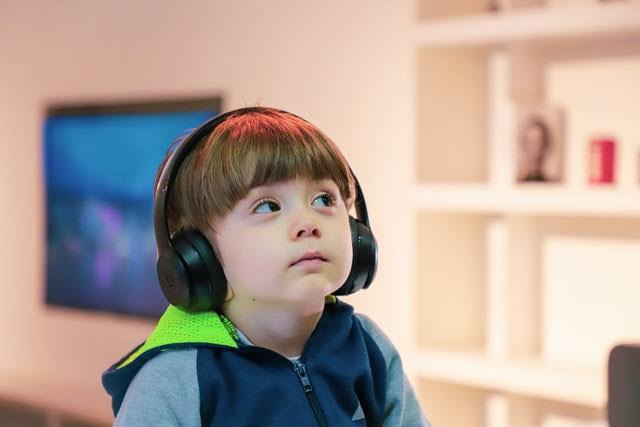
HOW TO UTILIZE THE GIFT OF MUSIC IN HELPING CHILDREN LIVING WITH AUTISM- FOR CAREGIVERS (Parents especially).

I have worked with a couple of autistic children and one common thing I have noticed is that caregivers wish children will just respond using force. Force has never guaranteed response from anyone, it might work when you are present with them but when you are not with them, they will follow what they feel is cool. Here are ways to utilize the gift of music;

 Own your journey; this is the most important point in everything I’ll be sharing with you today. Many caregivers, parents especially have a pattern in their mind of how things ought to be based on a number of information they have read, seen or heard. They are quick to forget that every child is unique and how they are related with is key in healing. Owning your journey means taking it a step at a time and being thankful all the way. Be thankful for your child, be thankful that you are their parent and above all be thankful that Jesus has beautiful plans for them no matter the disability.

 Engage them in music at every instance: Studies show that children with autism can understand both simple and complex emotions in music and are more responsive to sensory stimulation compared with other children especially in music, even over speech or noise.
Music can positively impact children with autism in diverse ways. You can use songs to emphasize speech in children with autism who struggle with language. One technique is to sing with vocabulary cards in order to teach vocabulary skills, you can also play music videos like COCOMELON that teach all these using music. Singing can considerably enhance language skills in students with a type of autism that has language delays.
Music can be used to help a child with autism recollect important information when it is linked with a musical sound, like a melody or rhythm.
One critical study found that music can be used to focus students’ attention, keep those with disabilities on track and decrease their anxiety from stress. I once had an autistic patient who could hardly focus but would pause at the sound of a rhythm made, master it and give you the exact way he heard it.

 If you are musically inclined, try engaging them using music elements in the simplest form.
Music elements such as pitch, melody, harmony, rhythm and so on. When children listen to a piece of music, the combination of musical elements are in it. However, some children with autism are auditory sensitive and it makes them experience a lack of forbearance for sounds.
You can help them by using separate musical elements to simplify their music. For example; start with a song, you as the caregiver can try teaching in stages by isolating pitches on the piano first. As they get comfortable with it, you can slowly introduce the other elements one at a time. be sensitive to know when they are not interested in one element and when they are interested in another.

 Compose songs with the child’s name as song title, it has a way of building self-confidence. For example, in this part of the world, many people have native names. If your child has a native name, you can make use of the name interpretation to compose a song and still mention his or her name in it. It gives a feeling of being loved, being known and all the god feeling.

 Employ music to help the aggression they feel. Autistic children are most times frustrated because of the difficulty they experience in expressing themselves but music can help as it can keep them calm by lessening their feelings of anger. Try different genres of calming and sensory music, see what works best for your young one.

This is not an exhaustive list on how to utilize music in helping children living with autism and like I mentioned earlier, it’s a journey you should take at your own pace encouraging yourself and your child as you walk through it. This journey will be both beneficial to you and your child.
You are doing a great job and I’m rooting for you always.

Need counsel? Need help or have questions? Feel free to drop them here or if for confidentiality’s sake you don’t want to, kindly write to me; mercykayt@gmail.com.


Thank You.
LINKS:

S H E W R O T E

One experience that stood out for me in a mental health hospital was that of an autistic child who I would love to give the fictional name, Amina. Amina was a child of 10 years who had lived with autism since she was a year old. Week-in, week-out, she came with her mum to the Hospital to see the doctor, get medications , attend educational therapy and what have you.

So this day, she came in sobbing and I had so much empathy on her that I would have shed a tear. Her mum said to me, “She likes covering her face whenever she steps into a room filled with people but I discouraged her from doing this which led to an outburst of tears”. This scenario is common with children with this disorder because of their poor social skills.

I’m sure you might be curious as to what happened next, how I was able to manage an autistic child who was sobbing, knowing the struggles of children who live with this ailment…

Research on music therapy shows that listening to music engages sub-cortical and cortical areas of the brain. Music has been shown to stimulate the brains’ primary engine of human capacity, exercises attention, evokes emotional response and stimulates the central nervous system. It also appears to activate the human mirror-neuron system, supporting the coupling between perceptual events (visual or auditory) and motor actions (leg, hand, or vocal or articulatory actions).

At one time, theories of human brain development argued that there was little or no growth of brain cells after age 30 but recent studies of music and the brain have shown this view to be erroneous. The brain is a plastic organ and music has the power to shape the brain’s development into later life. The implication of these findings is huge. Providing opportunities for people to experience music in many settings can have a profound impact on their healthy development.

Music has long been recognized as a powerful force in rehabilitative treatment, used clinically to address impairments in motor function, language, cognition, sensory processing, and emotional disturbances that can result from brain injury. It has been used successfully to induce cognitive repair in patients with stroke, Parkinson’s disease, cerebral palsy, or traumatic brain injury. Indeed, music has the potential to “fix” the brain, by providing an alternative entry point into a “broken” brain system to remediate impaired neural processes or neural connections.

Back to my story, I went on to administer music therapy to this young girl. I switched on the music on my phone and she began loosening up, then I picked up my guitar and started singing. Before I could say jack, her eyes were dried and she reached for a pen and began writing. For autistic children, writing is usually a challenge so you can imagine how much my heart leaped with joy when she began writing herself.

You can imagine that her mum tried using non-musical tones to communicate what she wanted her to do and it turned sour but at the sound of music she not only did what she wanted her to do but she did more by writing.

Amina returned home happy and I returned curious about this aspect of Therapy and eager to raise an awareness of it’s potency.

This is #TheDiaryofAnAspiringMusicTherapist, Episode 10

In view of what has been happening in recent weeks across the nations of the earth and the instruction to stay indoors to avoid the spread of the coronavirus, #TheDiaryofAnAspiringMusicTherapist will be on hold. We strongly believe this will end soon.

Please remain obedient to every rule given by our individual government authorities.

I look forward to reading from you and catch you soon!

C O N C E N T R A T I O N

I was at the hospital last week and it was closed down because the management thought to fumigate the hospital.
Every disappointment is truly a blessing, I have been wanting to share with you one of my experiences in the hospital where I had a patient who almost dislocated my arm.

I have this strong love for autistic children. I remember feeling the warmth of the embrace of a particular autistic child in my church, I must tell you I loved her immediately. There was this aura of peace she carried.

Well that’s not even the gist, I had a session with an autistic child in the hospital and honestly I was lost for songs or activities.
He was one child that had a very strong grip, you couldn’t just beat him to getting his body calm, he’d struggle with you.

If you know children living with autism, you’ll know that this comes with aggression that is common with the mental disability.
He also had difficulty in concentrating, so I could hardly get him to focus because it felt like something else needed his attention.

I figured out that I was not going to get his attention easily so I started by beating a rhythm because I was told he loved drumming, I did this repeatedly and honestly you will think he wasn’t listening or paying attention until he played the exact rhythm back to me without me asking and that was the bonding point for us.
He did the rhythm repeatedly and we transited into singing.

I did a song in his name letting him know that He is a gift from God and it was beautiful, he slowly calmed down and gave me his full attention. His mum was with him and she was so impressed, the song sent a message to her thatsaid regardless of the health challenge of her son, it doesn’t change the truth that he is a gift from God to the family and the world.

One thing I learnt from this session is this; producing a simple rhythm and hoping for him to reproduce it helped him concentrate. If this is continuous and consistent, he would be able to concentrate always and learn concentration in other aspects. Asides from the administration of Music Therapy helping patients calm down, it helps focus and concentration.

I am committed to doing this anytime and any day because the transformation I see always is priceless.

This is the #DiaryofAnAspiringMusicTherapist, Episode 9

You mean a lot to me and I love reading from you!

M U S I C A L D E C L A R A T I O N

You know when they say your words are weapon and you can either use it to your favour or use it to the detriment of yourself.
I was yet again in the company of parents who we normally care givers at the Emergency Paediatric Ward of the hospital.
They were a mix of tribe, largely Igbo and few northerners. I wasn’t nervous per say doing this with them even though I didn’t envision it while leaving for the hospital.
I think one of the things this journey is teaching me is to expect the unexpected and be prepared to deliver value at anytime.

I sat in the middle of the ward, strumming my guitar so the lyrics could pour forth, gradually the lyrics were on my lips and I had their attention.
If you’ve been following me, you’d know that I love short spontaneous music and I use it a lot in the hospital because I know it’s easy to remember few lines than lengthy lines and since one of my target is memory, having them remember the music when they hit despair then I know doing spontaneous music will work.

So the first song I did was on Peace and Health because lately I’ve been so endeared to the importance of always being at peace, I decided to gift them with a spontaneous music on Peace. These were the lyrics;
Peace to your body
Peace to your soul
Peace to your mind
.

It initially took a while for them to learn this because they didn’t feel good enough to sing so I encouraged them by singing one line then patiently wait for them to sing the next. They were doing so well and at each point they did, I made statements like Fantastic! Awesome! Just so they’d be encouraged. I made sure they declared these lyrics over their kids.

They finally perfected this and then I thought to do another spontaneous that had the fusion of Nigerian Pidgin, Igbo and Hausa language so I asked for the meaning of peace in both languages and I got them.
Here is the Lyrics;
You no go beg!
You no go borrow
Zaman Lafia, Udo!

This was really the most interesting for them because they felt like someone could do a song in their language, there was this sense of belonging.
I made them declare this over themselves and family, making them realize that there’s life in the words they speak and situations should not determine what they speak, little did I know that there was a mother among them who had been declaring very negative words. One of the mothers pointed to her saying ‘You see what we were saying! Just try not to speak negative when things go bad’.

We sang these words again deliberately and the joy! So pure. I feel this moment with these parents changed me more than it changed them because I have become so conscious of what proceeds from my mouth.


I’m thankful that I do this, I leave wards feeling very fulfilled each week and the fact that I bring light, hope, joy, peace to lives humbles me.


This is #TheDiaryofAnAspiringMusicTherapist Episode 7

I’m sure you know by now that reading from you gives me much joy and I always look forward to it!

T R A N S I T I O N

Transitions are beautiful yet they come with new challenges that are surmountable.
Last week when I wrote about sharing music with caregivers, I sort of knew deep within me that it was going to be my last time in the Paediatric ward of the hospital but didn’t know how it was going to happen.


The next time following the period that I did my last post on Caregivers (by the way if you’ve not read it, it’d be good to ‘cos it’s an enriching read).
To my story, the matron on duty gave me a warm welcome and took me to this new ward which was also Paediatric but this time for Emergency cases, there were a number of babies and as she introduced me to the nurse on duty, I was all there smiling and thinking of how to engage babies in Music but nothing was coming. In that moment, the only thing I knew to do was to jump into the waves.

I walked up to the bedside of this baby boy who was 4 months old, his mum was obviously perturbed and worse of all you could tell that having her baby in the hospital was not just her only problem, she seemed to shoulder a lot yet trying to be sane through it.
For some minutes I engaged her in a discussion, she told me of how her baby started teething, had been coughing, running temperature and hasn’t been eating. I was really emotional in this moment, I was on my feet still thinking of what to do when the nurse on duty came to tell the mother that she should get her baby milk so he could eat that was when I knew that her breasts hadn’t been bringing forth milk. I felt for her deeply, she was up and about leaving the baby and his sister with me, so I was left alone to share music with them.


Hmmmm I began singing because of course I couldn’t engage the baby, I just sang while he cried and was yet in pain.
I sang these words I shared today in my video, you can watch the video on Instagram: @escape_global.
These were the lyrics;
Peace through it all
Joy through it all
Hope through it all
You are never alone.
Peace through it all.

I sang this song repetitively for about 30 minutes or more and I couldn’t see visible improvement, maybe only the fact that it lessened his tears. I yet continued singing it over him.

I’m not one to easily give up when it comes to this but I came to a conclusion that the music I did lightened the burden that was in the atmosphere and it also made me accept the challenge of thinking unique approach to be used in administering music to babies in the hospital.

Over the next few weeks, I’d be in this ward so I’d unearth golden lessons that would be useful in Music Therapy administration with babies.

This is the #DiaryofanAspiringMusicTherapist Episode 6

I never get bored reading your feedbacks ❤️

C A R E G I V E R S

This past week was eventful for me, it challenged my mental capacity and ability to be creative on the spot.

I was in the Paediatric ward again with my musical instruments and I met what I didn’t prepare for. I had just stepped into the ward only to find that a nurse whom I had promised to do music for some weeks back was on duty. When she spotted me, she reminded me of my promise to share the joy of music with her, this time around adding that I share with everyone in the ward, she said to me “You know they didn’t have valentine with their family”.

I thought through this and decided I was going to do it, I have been so used to bedside music that this was sort of a challenge that I needed to surmount. When administering Bedside Music I could engage a patient in a conversation while trying to figure out his or her interest or the ailment thereby creating music of hope, joy and love but this was a lot different, it meant that I had to address every parent in the ward.

For some minutes, I was just running through chords on my guitar and thinking of Music that will suite the atmosphere, how to address them and so on. I finally got my balance and stood up to address them like a Choir Director (lol), told them of the song we were going to sing and of course taught them. They learnt so fast and in few minutes, I was on my guitar accompanying the music. For me this was so beautiful because initially the ward was echoing with cries from the babies but I noticed that as we sang together there was this calm from the babies.

We were soon done with the first song, Yes you saw that right, first song! They requested for another song because they felt it really lifted their spirits, so I taught them another song and boom! they were singing it so well. I again accompanied the singing with the guitar, it was everything refreshing.

In that moment, it became more real to me that the families of patients need the therapeutic effect of Music also, many of them are walking through very depressing season watching someone dear to them fade away due to an illness, It would interest you to know that some have seen their loved ones die in the space of 1 year, few months and weeks, I mean in succession yet they still spend their earnings and income to make sure this very one’s life is battled for.

I dedicate this post to them and I hope for opportunities to bring soothing relief to what they feel via Music.

This is the #DiaryofAnAspiringMusicTherapist Episode 5.
Kindly drop your comments and feedback, I always love reading from you!

S I M P L E

This time around they were two girls who were sisters and I can tell you they stole my heart from the very
minute I stepped to their bedside; One because they are actually beautiful and two because they had the best
smiles that was therapeutic for me. For me, there is a way smile speaks of acceptance even before saying or
doing anything.


Just before I continue with the tale of my time with these lovelies, I had earlier entered into the Paediatrics
Ward and it felt like I had become extra popular because all i was hearing was ‘Aunty Welcome’, ‘Aunty
Welldone, you are here again’. I could read the thoughts of those whose kids were newly admitted, they had
this face that said who is this lady with the guitar, what is she here to do. To further confirm that I was no
strange face in the ward, the nurse on duty who I am very familiar with was so glad to see me. I legit felt like a
regular customer but it was really heart-warming because it was beginning to make sense to them that what I
do is so needed in the healthcare.


Back to my tale, the girls were staring at me with a blush that said we are so shy to talk with this aunty but we’ll love it if she
talks with us. I took my seat and began conversing with them, the eldest amongst them was the one who was ill
and her sister had been with her to keep her company. They were my first Muslim patients so I initially cringed
because I understand their general belief system about Music.


Well this didn’t stop me; I had beautiful conversation with them about Health, life, school, Music and so on. I
listened more than I talked; we conversed as if we had known each other for long. During the course of our
conversation, I picked one thing and it’s the fact that their hearts were so simple, no airs and worries just living
life as it comes. I think the conversation changed me more because here was I worried about their would be
response to music but here they just loved it that they can converse with someone other than their family
members.


Close to the end of my session with them, these girls sang their best nursery rhymes, I learnt their native dialect, we sang together on the guitar
and it was so beautiful. This taught me two things, one you do not assume for a patient until you have made the
bold step to ask or try.

Two, prioritize care over cure when administering music to patients, sometimes we are
so concerned about the outcome than what happens in the process. It is not always about fixing the problem
and seeing a desired outcome, it is sometimes about bonding, the memory that lingers via conversation.
Remember, this is a compendium of lessons learnt, miracles of music in the hospital as an Aspiring Music
Therapist.


This is the #DiaryofAnAspiringMusicTherapist Episode 4.
Kindly drop your comments and feedback, I always love reading from you!❤️