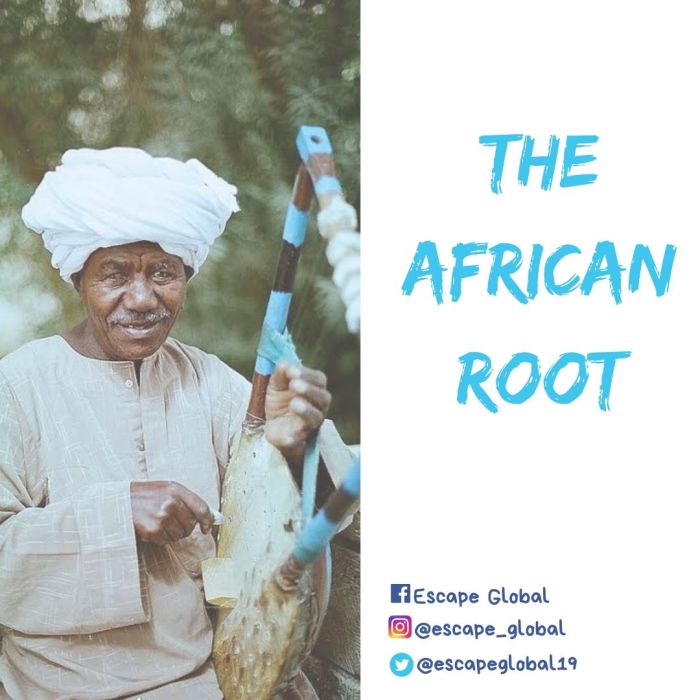
The African ROOT

I am sure in the last one week we have had questions of whether this kind of therapy has any root in Africa as a whole. Whether or not there is a traceable history of Music Therapy in Africa is what is about to be unveiled here.

Goodnews! Music Therapy in Africa is traceable, its as old as tradition itself, it may not have been documented or even given a definite name as we have it now but it has long been existent.

Just a background knowledge of Africa for my non-African followers, Africa is the second largest continent in the world with about 1.2 billion people of the world’s population as of 2016. Africa has a very rich and beautiful cultural heritage, among the many continents in Africa are Nigeria, Egypt, Republic of Benin, Rwanda, Republic of Congo, Kenya and so on.

I’m sure by now you already have a little background knowledge of the continent Africa. There has been a question if Music Therapy has ever existed in Africa. Learning about this, I was thrilled at such rich`history Africa has and in this post I will be sharing a few.

In Africa, music is seen in every stage of life, from birth to death. Every transition or call it change in status calls for the use of music, from birth to adulthood to marriage to death.

The inception of Music Therapy in Africa has been since Ancient times, although there were few written records, most of the information have been by oral transmission which is passed down from one generation to another.

In Ancient Egypt, ancient man used singing and dancing as a part of his rituals to throw out the evil spirits, which were waiting to attack him with several diseases. Abidos Temple was the biggest center of medicine in Ancient Egypt and the priests treated diseases with chant. It was discovered that there was a saint called Abu Terbo who treated epilepsy using pipes chant. Egyptian priests and physicians alluded music as medicine for the soul, chant therapies were also included as part of the medical practice. Below this post is a link to a video of Ancient Egypt healing Music, listen and let me know your thoughts about it.

In some other parts of Africa also, Music Therapy was also instrumental in TRADITIONAL HEALING. For example in Nigeria, it was embedded in culture and was mostly performed by native doctors. For Non-Africans, NATIVE DOCTORS are not the same as HOSPITAL DOCTORS, they are doctors who use traditional prescriptions and carry out rituals also. These Native Doctors had specialty in healing with the use of ritual music.

Traditional healing had a lot to do with SPECIFICS, that is there had to be a SPECIFIC song to be sung, a SPECIFIC time of the day or night and a SPECIFIC traditional instrument had to be used for this purpose, it was not just done without restraints.

Professor Mereni, the foremost forerunner of Music Therapy in Nigeria conducted a research in the town Irigwe in Plateau state of Nigeria. He discovered that the traditional medicine man called Nevo prescribed the “Sa rije” ritual, this is a ritual characterized by music and dance and is used as treatment for women suffering from a syndrome known as “Ci rima”.

A patient with “Ci rima” syndrome had the following symptoms; prolonged abnormal pains, vomiting, persistent diarrhea, hallucination, fever and prolonged loss of appetite. While this happens, the “Nevo” prescribed the music ritual ceremony known as “Sa rije”. It was then used in the treatment of the woman suffering from Ci rima syndrome. It is said that certain patterns of music were used as the Nevo observed the patient and gave traditional treatment.

This sums up the fact that Music Therapy has been long existent and also it wasn’t just administered anyhow, they had to follow traditions and cultures.

Despite the viability of Music Therapy since Ancient times, it is one that is still not recognized in many parts of the continent Africa today.

Let me know what you think about this post also in the comment section below. I love reading from you!

Thank you for reading through. Lots of Love!

SOURCES: https://voices.no/community/index.html?q=country-of-the-month%252F2012-music-therapy-nigeria

http://citeseerx.ist.psu.edu/viewdoc/download?doi=10.1.1.508.4197&rep=rep1&type=pdf https://voices.no/community/index.html?q=country-of-the-month%252F2005-music-therapy-egypt
VIDEO: https://www.youtube.com/watch?v=s2FW2EairNU

The Root

History is needed to understand the field of MUSIC THERAPY. Just like every other thing in life did not just happen but was instigated by some persons, events, situations and so on so also is MUSIC THERAPY.

The History of Music and its affiliation to humanity goes way back to the beginning of time; the more the world becomes civilized, the more it affects people and their use of Music.

The early Native Americans, this was Ancient Civilization, they used music in communicating with their gods and nature, they also used this as a healing tool and a way to have camaraderie within their communities.

They were in the habit of coming together as a tribe to chant, dance and pray for their loved ones who were sick. How sweet you might say!

Still in Ancient civilization, there was Mania and Catharsis, they were popular terms in the ancient Greece. Mania had to do with mental illness while Catharsis had to do with the purging of soul through music.

Music in Ancient Greece was mainly used for purgative effect and to transit into the dreamland in such a way that they could or would return with pleasant dreams (I think this happens to me too). The flute was a major musical instrument used for this purpose.

The Pythagoreans employed a daily routine of music therapy. They enjoyed music before retiring to bed after a long day and it helped them to calm down, it also gave them a good night’s sleep with pleasant dreams. At the dawn of a new day, they performed special compositions on the lyre, which helped them to jiggle the daydreams from the night before and prepare for the intense rhythms of the day. The Pythagoreans probably had knowledge of the relationship between musical rhythm and temperament, and applied musical prescriptions based on their circumstance.

In addition to therapeutic songs from Ancient Greece were Curative songs called Epodes. This was more like a magical spells and it was said to have been instrumental in healing heartbreaks. So you know that songs for heartbreaks didn’t just start today.

At this point Music Therapy had not been defined yet as a professional practice until the end of World War 11.

This is why the American Music Therapy Association (AMTA) gives credit to Ancient Civilization for the start of Music Therapy, in their words, “The idea of music as a healing influence which could affect health and behavior is as least as old as the writings of Aristotle and Plato”

At the end of World War 11, Music Therapy became a recognized treatment in the United States, between I read a very interesting story on this and I hope to share both the write up I have done on it and the video I was privileged to see.

Back to my story or history as the case may be, Nurses and Doctors recognized how music helped patients who had severe physical and emotional trauma due to the war.

Because of this, they thought to consider the start of an Institute of Education where people who were passionate about the field of Music Therapy could professionally practice music in a medical society.

This became the official start of Music Therapy!

Okay! Let me know what you think about this post as I am looking forward to your questions, contributions and critique. I love reading from you.

Thank You!

SOURCES: http://www.greece-is.com/music-therapy-in-ancient-greece/

https://petersonfamilyfoundation.org/music-therapy/science-music-therapy/

MY PROJECT JOURNEY 2

Research on music therapy shows that listening to music engages sub-cortical and cortical areas of the brain. Music has been shown to stimulate the brains’ primary engine of human capacity, exercises attention, evokes emotional response and stimulates the central nervous system. It also appears to activate the human mirror-neuron system, supporting the coupling between perceptual events (visual or auditory) and motor actions (leg, arm/hand, or vocal or articulatory actions). At one time, theories of human brain development argued that there was little or no growth of brain cells after age 30 but recent studies of music and the brain have shown this view to be erroneous. The brain is a plastic organ and music has the power to shape the brain’s development into later life. The implication of these findings is huge. Providing opportunities for people to experience music in many settings can have a profound impact on their healthy development.

Music has long been recognized as a powerful force in rehabilitative treatment, used clinically to address impairments in motor function, language, cognition, sensory processing, and emotional disturbances that can result from brain injury. It has been used successfully to induce cognitive repair in patients with stroke, Parkinson’s disease, cerebral palsy, or traumatic brain injury. Indeed, music has the potential to “fix” the brain, by providing an alternative entry point into a “broken” brain system to remediate impaired neural processes or neural connections.

Back to my story, I went on to administer music therapy to this young girl. I switched on the music on my phone and she began loosening up, then I picked up my guitar and started singing. Before I could say jack, her eyes were dried and she reached for a pen and began writing. For autistic children, writing is usually a challenge so you can imagine how much my heart leaped with joy when she began writing herself.

We can imagine that her mum tried using nonmusical tones to communicate with her but it turned sour but at the sound of music she not only did what she wanted her to do but she did more by writing. This amplifies research findings that Music is read differently in the brain than nonmusical tones.

Amina returned home happy and I returned curious about this aspect of Therapy and eager to raise an awareness of it’s potency.
Stay glued to my blog as I enlighten you every week on Music Therapy.

MY PROJECT JOURNEY 1

I started my project early enough and I had to visit the hospital which was situated in Lagos a number of times for approval, that meant I had to travel from time to time since my school was in Ile-Ife Osun State. Traveling didn’t feel like a burden to me because I was eager to see the wonders of music.
I visited the hospital about two times before my project work with them was approved and they asked that I be posted to the children section of the Federal Neuro-Psychiatric Hospital which is situated in Oshodi, Lagos State.
I was slated to work with children ages 4-10 years but during the course of the project I worked on teenagers too.
One experience that stood out for me was an autistic child who I would love to give the fictional name, Amina. Amina is a child of 10 years who has lived with autism since she was a year old. Week-in, week-out, she came with her mum to the Federal Neuro-Psychiatric Hospital Annex at Oshodi to see the doctor, get medications , attend educational therapy and what have you.
So this day, she came in sobbing and I had so much empathy on her that I would have shed a tear. Her mum said to me, “She likes covering her face whenever she steps into a room filled with people but I discouraged her from doing this which leads her to always cry”. This scenario is common with children with this disorder because of their poor social skills
I’m sure you might be curious as to what happened next, how I was able to manage an autistic child who was sobbing, knowing the struggles of children who live with this ailment…


Watch out for my next blog post.

Have a great week ahead!